How to trade meme coins in 2026 without turning your wallet into a casino
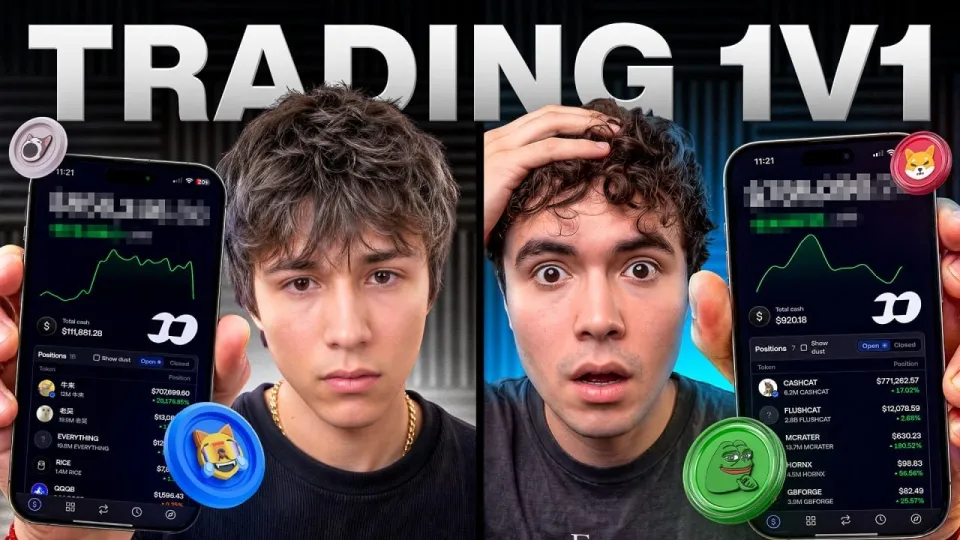
Video: I Challenged A Pro Memecoin Trader (Who Won?)
You can order the same kind of articles for your own video to boost it on YouTube and Google. Just message the Telegram bot @sat_sit_bot. The bot writes and publishes the articles itself (with your YouTube video embedded) on popular topical websites (no ads). Try it free: 50 articles on us.
· based on the channel insentos
Key takeaways
- Meme coin trading is a short-horizon game: most Solana launches die within hours, so exits matter more than entries.
- Position sizing is the main edge: risking 1–3% of the wallet per trade keeps a losing streak survivable.
- Liquidity and holder distribution beat any chart pattern on a token that is minutes old.
- Tools like Axiom bundle charting, sniping and wallet tracking; fomo.family adds a copy-trading layer.
- Live trading challenges usually end near break-even, which is the realistic baseline for most traders.
Meme coin trading is the practice of buying and selling tokens with no cash flow, no product and no valuation anchor, where price is driven almost entirely by attention and liquidity. In practice it is a short-horizon game: you buy a narrative early, size the bet small, and exit into someone else's enthusiasm before the crowd flips. The insentos challenge video, where a guest trader takes live calls and explains his thinking mid-trade, is a useful window into that workflow — and you can follow the same route via the fomo.family referral link if you want the tooling side handled for you.
What a meme coin actually is and why it behaves differently
A meme coin is a token whose value rests on community, memes and momentum rather than revenue. That single fact explains most of its behaviour: there is no earnings floor, so drawdowns are not bounded by fundamentals, and there is no analyst consensus, so price discovery happens in real time on social feeds.
Three structural traits matter for anyone trading them:
- Supply is usually concentrated at launch. A handful of wallets often hold a large share of the float, which means one seller can move the chart.
- Liquidity is thin and removable. On Solana launchpads, the pool can be pulled or drained, and slippage on a $2,000 order can be brutal on a token with $30,000 of liquidity.
- Lifespan is short. Most new launches fade within hours; a small minority survive long enough to become a recognisable community asset.
None of this makes meme coins illegitimate as a trading instrument. It makes them a high-variance instrument where risk control, not prediction, decides whether you are still around next month.
The workflow a pro meme coin trader runs on every trade
The professional approach is boring and repeatable: screen, verify, size, enter, manage, exit. The interesting part is that the checklist is executed in under two minutes, because on a fresh launch two minutes is the whole trade.
Step 1 — Screen. Scan new pairs and volume spikes, filtering out tokens with obvious red flags before you look at the chart. Tools such as Axiom combine charts, on-chain data and execution in one interface, which is why it shows up in so many memecoin trading setups.
Step 2 — Verify the contract. Check holder distribution, whether the deployer wallet still holds a large bag, whether liquidity is locked or burned, and how many wallets bought in the first block.
Step 3 — Size the position. A common rule among traders who survive is risking 1–3% of the wallet per trade. If the token goes to zero, the account is intact.
Step 4 — Define the exit before entry. Decide the price or market-cap level where you take profit and the level where you cut. Writing it down before clicking buy is the difference between a plan and a hope.
Step 5 — Manage actively. Scale out in tranches, move the stop as the price advances, and accept that you will sometimes sell too early. Selling too early is a profit; holding too long is a loss.
Reading liquidity, holders and socials before you click buy
Due diligence on a meme coin takes minutes and covers three questions: can I get out, who else is in, and why is anyone talking about this.
On liquidity, compare pool size to the order you intend to place. A useful sanity check is that your position should be small relative to the pool, otherwise your own exit moves the price against you. On holders, look at the top wallets: a large share held by a single address that is not a locked liquidity pool is a warning, not an opportunity. On socials, check whether the community existed before the price moved. A Telegram that was created an hour ago and a Twitter account with bought followers describe a marketing campaign, not a community.
The most common beginner error is the reverse order: buying on a green candle, then researching. By the time the research is done, the trade is over.
Position sizing and risk rules that keep meme coin traders alive
Risk management is the only part of meme coin trading that compounds reliably. Everything else is a probability distribution you cannot control.
- Fixed fractional risk. Risk a set percentage of the wallet per idea, typically 1–3%, and never average down into a token that has broken your thesis.
- Cap the number of open positions. Ten simultaneous micro-cap bets is not diversification; it is one correlated bet on the same market mood.
- Take the initial risk off. Selling a portion once the position doubles turns a gamble into a free option.
- Track results in a spreadsheet. Win rate, average winner, average loser. Without these three numbers you cannot tell skill from a good week.
- Respect the tax on attention. Meme coins reward screen time; if you cannot watch the position, do not open it.
The guest in the insentos challenge is notable precisely because he narrates his reasoning while a trade is live — position size and invalidation level come up before the entry does. That ordering is the lesson.
Why live trading challenges usually end close to break-even
A recurring observation in the comments under these videos is that challenge formats tend to finish flat or slightly down, and that trading from an influential account is easier than trading from an anonymous wallet. Both points are fair and worth unpacking.
First, a live session is a small sample. Twenty trades in an hour is noise; the edge, if any, shows up over hundreds of trades. Second, streaming adds pressure: you explain, you answer chat, you take slightly worse fills. Third, attention itself is a market factor — a token mentioned to a large audience can move on the mention, which is not a repeatable strategy for the viewer watching it happen.
The realistic takeaway from a challenge video is not a profit figure. It is the process: how the trader screens, how fast he rejects, how he sizes, and how he behaves after a loss.
Tools, courses and the beginner question of where to start
Beginners consistently ask the same thing: which platform, which settings, which course. The honest answer is that tooling is the easy part and discipline is the hard part.
Start with a small bankroll you can lose entirely without changing your life, and treat the first month as tuition. Use one execution and charting interface rather than five so that your data is consistent — Axiom is the one referenced in the insentos setup. If you want a structured environment with copy-trading and community features, the fomo.family route is the one linked from the video. Then paper-trade or trade minimum size until your spreadsheet shows a positive expectancy over at least 50 trades.
What does not work: buying every call you see in a group chat, chasing tokens that already ran 10x, and adding to losers. Community access is genuinely hard to get into, as several viewers note, but paying for access before you have a track record just transfers your bankroll to someone else.
Useful links
- fomo.family — registration and copy-trading access via the insentos link
- Axiom — trading terminal used in the challenge
- insentos on X
- insentos on Instagram
- insentos on TikTok
The bottom line on meme coin trading
Meme coins reward speed and punish conviction; the traders who last are the ones who treat each launch as a small, disposable bet rather than a thesis. The insentos challenge is valuable because it shows the unglamorous parts — fast rejection of bad setups, explicit position sizing, and a calm reaction to losses — instead of only the winners. If you take one rule away, make it this: define your exit and your maximum loss before you enter, and let the market decide the rest. The channel insentos is worth following for more of these live breakdowns, and you can start with the same tooling through the fomo.family referral link.
Questions & answers
Is meme coin trading profitable for beginners?
For most beginners it is not profitable at first, and often not at all. The realistic goal in the first months is to survive: small fixed risk per trade, a written exit plan, and a spreadsheet that shows whether you actually have an edge over 50 or more trades. Treat early losses as tuition rather than as a signal to increase size.
How much should I risk on a single meme coin?
A common professional guideline is 1–3% of the trading wallet per idea, with a hard cap on how many positions are open at once. Because most new launches fade within hours and liquidity is thin, a single oversized bet can wipe out weeks of gains. If a full loss on the position would change your plans, the position is too large.
Why do live trading challenges often end near break-even?
A streamed session is a tiny sample of trades, and it adds distractions that hurt execution — explaining decisions to an audience, slower clicks, worse fills. Attention also moves price, which flatters the streamer and does not transfer to viewers. Watch challenges for the process, not for the profit number.
Which tools do meme coin traders actually use?
Most use one terminal that combines charts, on-chain data and execution, such as Axiom, plus a wallet and a screener for new pairs. Some add copy-trading or community platforms like fomo.family. The tool matters far less than consistent risk rules and a record of your own results.
Source: I Challenged A Pro Memecoin Trader (Who Won?) · Markdown version